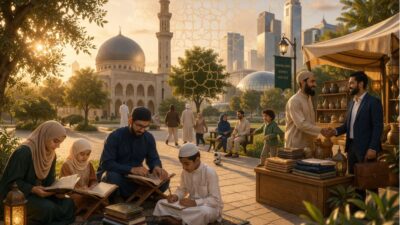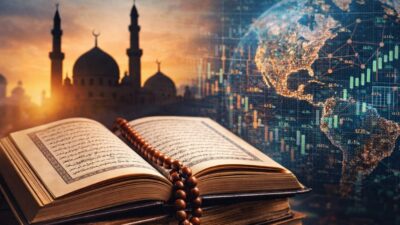
In the modern world, Muslims are often faced with an important question: do Muslims need a political or economic ideology in order to organise themselves, develop their societies, and remain strong in global competition? Modern ideologies appear powerful because they offer structured programmes, clear slogans, organised movements, and visible political direction. In comparison, speaking only about “values” may seem vague or insufficient. However, the deeper question is not whether Muslims need guidance or structure. They certainly do. The real question is whether this guidance must come from rigid human‑made ideologies, or whether Islam itself already provides a comprehensive framework for individual and social life.
To understand this discussion properly, it is helpful to clarify some key concepts. Values are moral beliefs about what is important — such as justice, compassion, honesty, dignity, and responsibility. Principles are stable standards that translate these values into practical action — for example fairness in trade, accountability in leadership, protection of the weak, and fulfilment of contracts. An ideology goes further by organising values and principles into a structured human programme that aims to shape how society and political power should function.
Islam certainly contains values and principles, but it is not limited to the format of modern ideologies. Islam offers guidance rooted in revelation while still allowing thoughtful adaptation to changing contexts. It addresses belief, morality, law, family life, economic conduct, and governance ethics. This makes Islam more than a vague moral sentiment. At the same time, it does not confine Muslims to one rigid political or economic model designed in a particular historical context.
This broader understanding is reflected in the concept of Maqasid al‑Shariah — the higher objectives of Islamic guidance. Scholars explain that Islamic law aims to protect essential aspects of human wellbeing such as faith, life, intellect, family, and wealth. Many also emphasise dignity, justice, and public welfare as part of this vision. These objectives help Muslims evaluate policies and systems by asking whether they genuinely promote human flourishing and reduce harm.
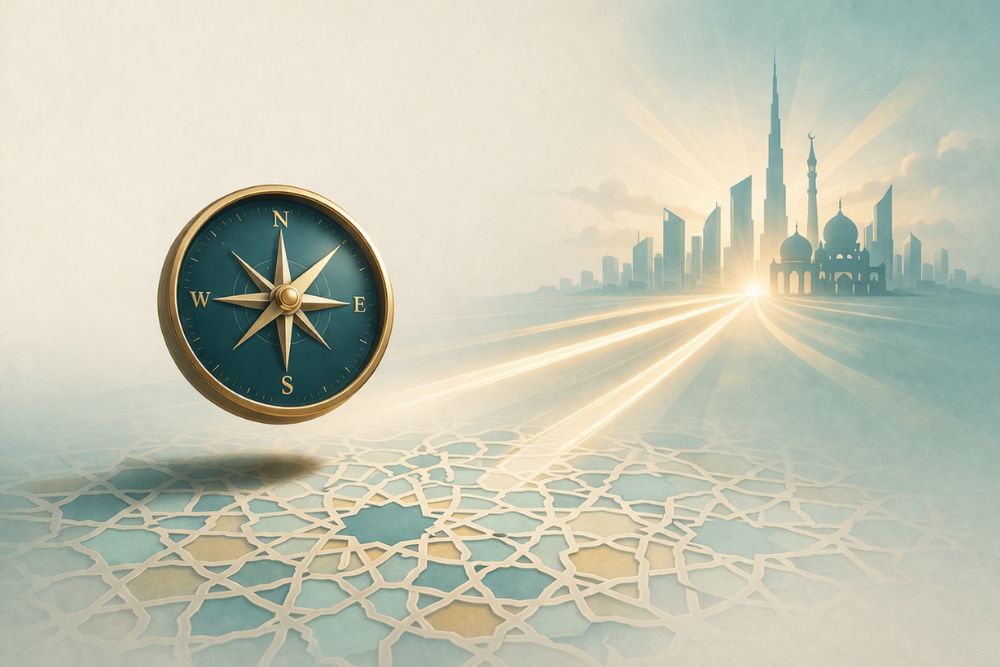
A useful way to understand the relationship between Islam and modern systems is through the analogy of a map and a compass. Human ideologies can be compared to maps. They provide specific routes and system designs, but they may change depending on time, place, and circumstances. Islamic guidance functions as a compass because it offers enduring moral direction. Yet Islam is also more than that. It provides structured guidance — a flexible map shaped by principles, objectives, and methods of reasoning. In this sense, the map and the compass interact, but the compass is not created by the map.
The flexibility within Islamic law further illustrates this point. The Qur’an allows prohibited food in situations of necessity. A believer under coercion may utter words of disbelief while the heart remains firm in faith. Acts of worship such as prayer can be shortened during travel or adjusted during hardship. Dry ablution is permitted when water is unavailable. Even social laws such as inheritance operate within a framework that considers varying family circumstances. These examples show that Islamic guidance is principled but not mechanical.
The Prophetic model strengthens this understanding. During the Makkan period, the Prophet Muhammad ﷺ focused on belief, moral reform, honesty, patience, and the dignity of the oppressed. Even before prophethood, he participated in Hilf al‑Fudul, a pact formed to defend the oppressed in Makkah. Later he praised this alliance, showing that justice and moral cooperation were central concerns. In Madinah, he built brotherhood between communities, established civic agreements through the Constitution of Madinah, regulated fair trade, and practised consultation. At Hudaybiyyah, he accepted terms that seemed difficult in the short term because they served long‑term peace and stability. These examples show leadership guided by principle, wisdom, and pragmatism rather than rigid ideological confrontation.
The experiences of earlier prophets also reflect this pattern. Prophet Musa (peace be upon him) stood against tyranny in the court of Pharaoh by calling people towards truth and liberation. Prophet Isa (peace be upon him) challenged moral corruption and hypocrisy among his people. Their missions centred on ethical transformation rather than the construction of formal political ideologies.
In the modern era, many Muslims began to feel a strong need for ideology due to historical pressures. The collapse of long‑standing Muslim political institutions, colonial domination, imported nation‑state models, and the rise of powerful global ideologies created a sense of vacuum. Ideology seemed to offer clarity and mobilisation. As a result, some movements presented Islam itself in ideological form. While this response was understandable, it sometimes narrowed the broader moral and civilisational vision of Islam.
Modern Muslim societies continue to illustrate this ongoing search for balance. Countries such as Turkey have moved through different ideological phases over the last century. Malaysia and Indonesia have experimented with combining democratic governance, economic development, and Islamic ethical values in diverse ways. Muslim minorities across the world often pursue progress through education, entrepreneurship, and civic engagement within plural societies. These experiences show that there is no single fixed ideological path for Muslims today.
Moving Forward: A Principled and Practical Path
If Islam is understood as a framework of values, principles, and higher objectives rather than a rigid ideology, an important question arises: how can Muslims translate this understanding into real progress?
One key step is prioritising human development and knowledge. Historically, Muslim societies that invested in learning, science, trade, and institutional excellence were able to contribute meaningfully to civilisation. In today’s world, this means focusing on quality education, technological competence, ethical entrepreneurship, and professional integrity.
Another important area is constructive civic participation. Muslims can contribute positively within existing political systems by promoting justice, transparency, and welfare‑oriented policies. This does not require rigid ideological movements. Instead, it involves building alliances, engaging in dialogue, and working gradually to improve governance and social harmony.
Strengthening community institutions is equally vital. Charitable initiatives, educational organisations, financial cooperation networks, and family support systems can help address inequality and social fragmentation. The historical institution of waqf, for example, supported public welfare such as schools, hospitals, and social services. In modern times, the growth of Islamic finance demonstrates how ethical economic principles can be adapted to contemporary markets.
Ultimately, Muslims need a framework without rigidity. They need moral clarity, institutional thinking, and strategic pragmatism. Progress is not achieved by choosing a single ideology to dominate society, but by consistently working to realise justice, human dignity, and collective wellbeing within changing circumstances.
In the end, the question is not whether Muslims need direction. They do. The real question is what kind of direction can guide them faithfully in a complex world. Islam offers moral conviction without blindness, structure without dogma, and flexibility without moral surrender. This balance may be more demanding than simply adopting an ideology, but it is closer to the Prophetic path and more sustainable for Muslim communities seeking long‑term flourishing.
Disclaimer: This article reflects personal reflections based on Islamic teachings and historical understanding. It is intended for thoughtful discussion and does not represent political endorsement or criticism of any individual, group, or government.